


Standing on this piece of land, there is much that we are grateful for. You see, we have a dream: That those who find Buddhist teachings useful in their lives, can learn how to apply these teachings to make their lives even better.
It is a race against time.
To be honest, I wasn’t always interested in planting flowers. I would have to put in a lot of effort—watering them, adding fertilizers. But at the end of the day, I can only appreciate them. Vegetables on the other hand, when harvested, can fill my tummy. More bang for the buck.
In an effort to preserve the natural areas around our monastery, we planted over 8,500 trees.
We’ve had our tree nursery for 9 years. When we first planted these trees, we spent a lot of time studying how to care for them.
- 393 acres (forests, wetlands, gardens, etc.)
- Preserving and restoring healthy forests — Planting over 8,500 trees, our nuns monitor and nurture each tree throughout the year to support their growth
- 2019 — Donated 7 acres “Wellspring of Peace” to Island Nature Trust
- 80 acres in Brudenell; 7 acres in Uigg
- As the largest group of Buddhist nuns in the world dedicated to preserving, reviving and proliferating Tibetan Buddhism, we hope to provide opportunities for females all over the world to become top Buddhist scholars and practitioners
- 190 acres
- All in production: We work with small, local organic farmers
- Adopting organic farming practices, we strive to be stewards of the land by keeping our land, water, air, and community healthy and free from harmful toxins
1. How much land do you own? Will you buy more land?
GWBI owns roughly 670 acres (490 acres in Brudenell, 180 acres in Vernon Bridge).
Below are visuals of GWBI land use.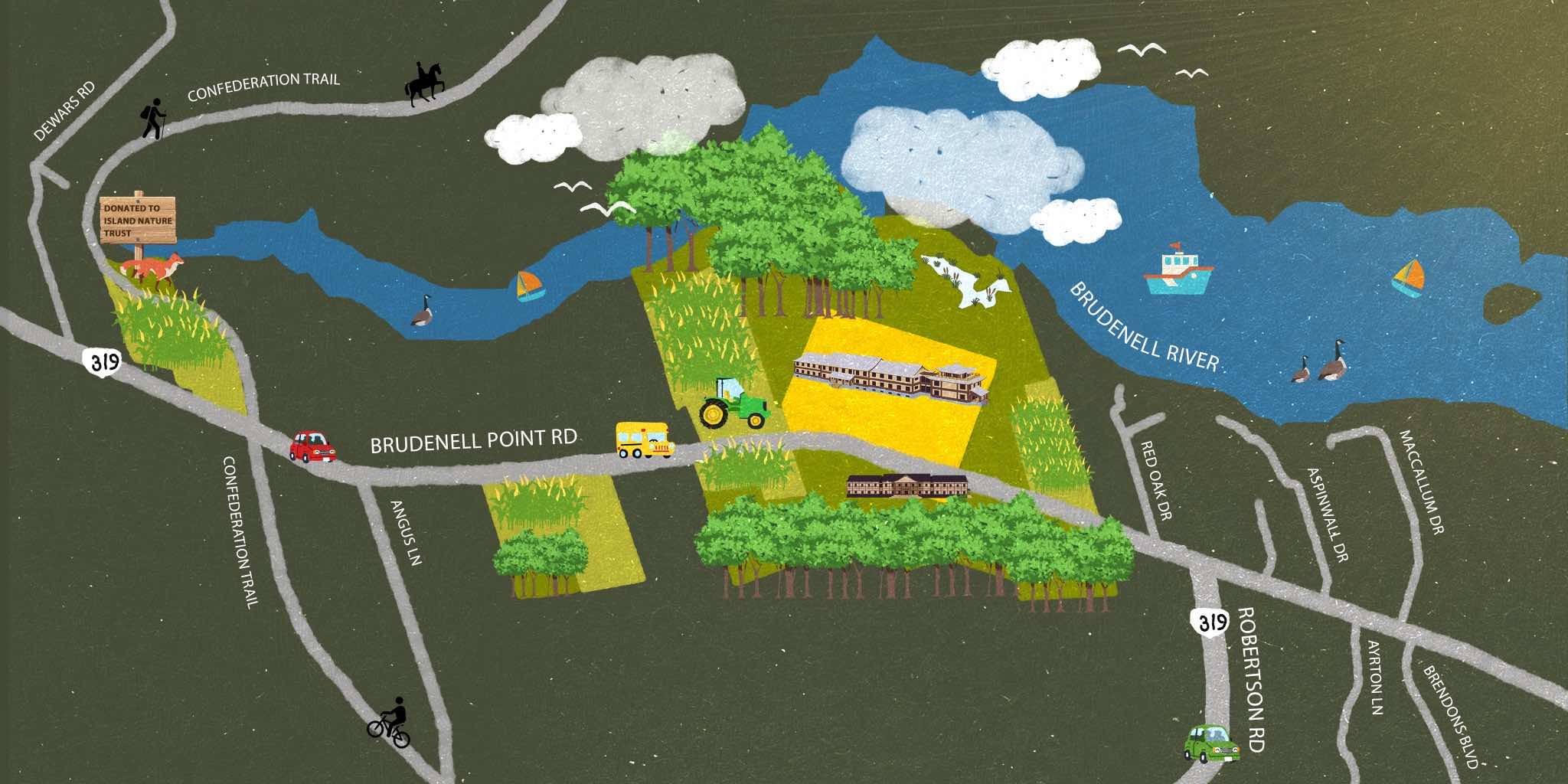
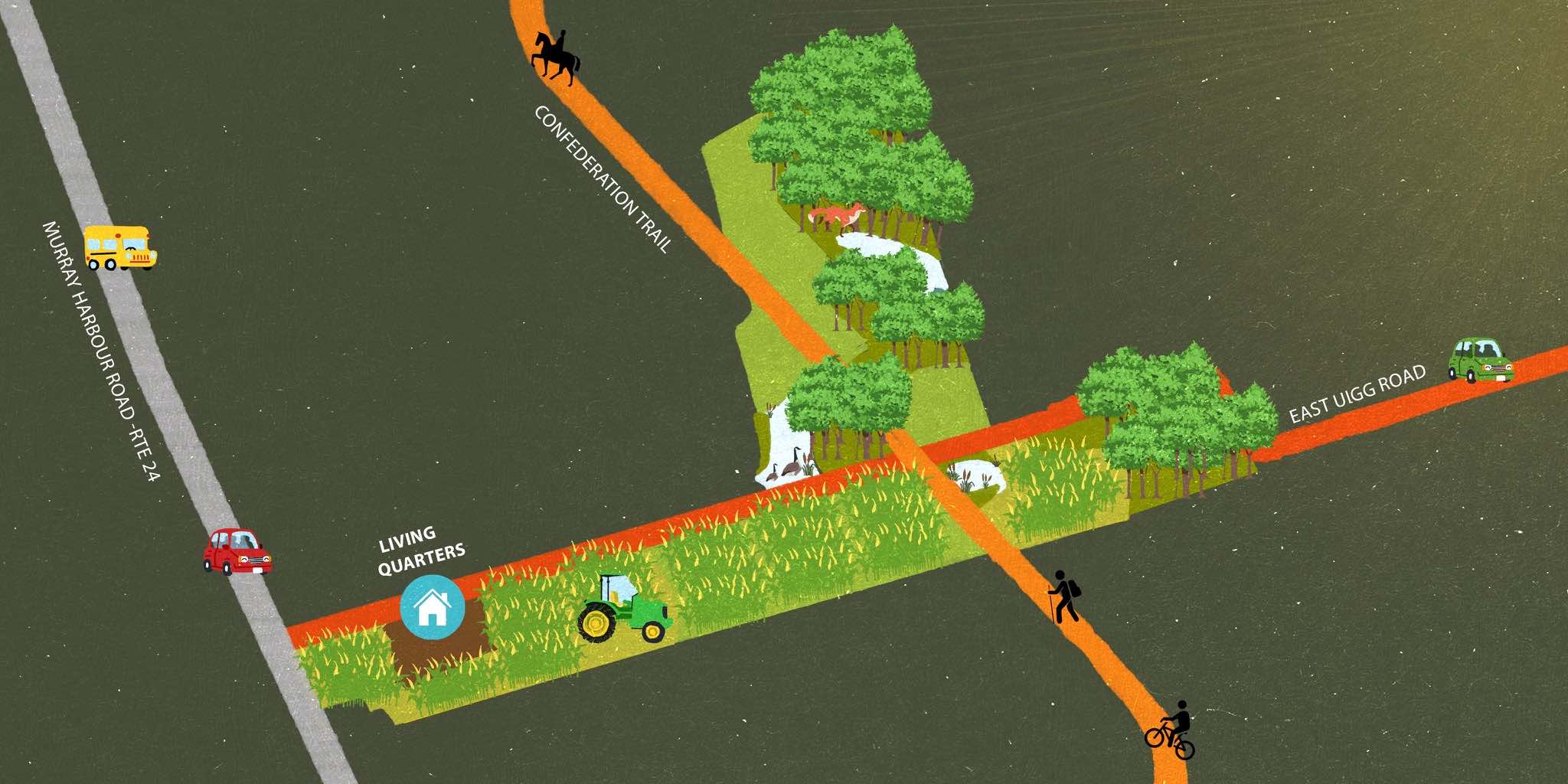
All GWBI land transactions, gifting or leasing will abide by the spirit of the LPA and all IRAC procedures.
There have been no land transactions in almost 6 years.
We are aware concerns about land are also about individual ownership. Even though GWBI doesn’t have the right to disclose an individual’s private information, we’ve asked individual nuns about properties they’ve purchased. In the spirit of transparency: less than 10 nuns own a cumulative 270 acres of land in Brudenell. They bought land surrounding the monastery as they wanted to protect the monastery from being surrounded by future commercial development.
In 2023, figures (i.e. 17,000 acres) started circulating around. These numbers are ridiculous. Our Buddhist community tried to understand how these numbers were calculated as we have been unable to arrive at them ourselves. People who have inquired, told us that the 17,000 acres was a sum of land holdings of people with Asian last names. We contacted the Coalition for the Protection of P.E.I. Lands to verify and did not receive a response.
2. How much agricultural land do you own? Is it in production?
We own about 195 acres of agricultural land; all of it is in production utilizing organic farming practices. Besides farming our own land, we are grateful to have the opportunity to support small local organic farmers (i.e. Beattie Farms, Whiskey River Organics, and Derek Mellish) by leasing our land to them so they can fulfill a common vision.
3. Why do you need so much land? What do you do with your land?
The land we own enables us to build a conducive environment for Buddhist practice, as well as offer females from all over the world the opportunity to dedicate their lives to a common mission. A conducive environment is made up of not only a monastery campus, but also wide areas of surrounding greenspace and agriculture lands. These large patches of greenery and farmland aid in our contemplative practice as we are not surrounded by commercial buildings or overdevelopment. The natural landscape protects us from the daily distractions as well as the hustle and bustle of city life, freeing our minds to reflect inwards.
4. Are your land purchases exempt from IRAC review?
No. All of our land transactions, gifting or leasing must go through IRAC.
5. How many houses does GWBI own? Why do you need houses?
GWBI owns 7 houses, which serve different needs as they arise. For example, housing for nuns recuperating, self-isolating per our wellness team’s recommendations and accommodations for visiting nuns during retreats.
6. I’m concerned that rural areas like Brudenell have not been carefully planned to accommodate the needs of 1,400 nuns. What have you done to ensure that the ecological and environmental impacts of land for septic bed systems, quality of well water and development of a localized sewer system have been addressed?
As part of PEI government’s requirement, in 2018, GWBI hired Ekistics Planning & Design, to prepare an Environment Impact Assessment (“EIA”) report on how the monastery will use land to maximize the sustainability (economic, ecological, cultural) for the long term.
There are no central services in Brudenell (water or sewer) so servicing will be handled onsite. GWBI has set aside 10 acres of land for onsite wastewater treatment to accommodate the needs of 1,400 nuns (maximum capacity expected to be reached in 20 years or more).
Ensuring the quality and quantity of the aquifer below GWBI lands will be a top priority for the development. As such, GWBI will not be drilling high capacity wells. In addition, conserving resources is of utmost importance at GWBI. The amount of water used daily by a nun is less than half of an average person’s according to StatsCanada.
Regarding stormwater management, engineers have designed it for zero run-off.
All our infrastructure has been designed by engineers and approved by the Department of Environment, Energy and Climate Action.